
Cancer Saved Me

Two years ago, I wrote the first piece for what would become Cinema Soliloquy. It was a short treatise on cinema-at-large, and how the unique human experience lets us live memories anew when projected back at us on the silver screen. It is a fine piece, and I’ll always tend towards self-criticism over any sort of retrospective appreciation, but the temporal distance has begun to dawn on me as I have taken the last few weeks off from writing anything on here. In a life full of aspiration and less-than-admirable efforts at chasing those dreams, I remain proud of the words spilled here, illuminating the films and stories that have shaped my experience in a real, tangible way. This entire month has been one of reflection, really: I turned 27 at the beginning of June, I visited New York to take in a relatively small portion of the Tribeca Film Festival, and I have spent most of the extended daylight we have here in Chicago trying to enjoy my favorite season, Midwestern Summer.
Really, though, I have spent a lot of this June trying to figure out where I’m at, and, more importantly, where I’m going. I won’t fall into the trap of anachronistic life-marker-crisis mode (I am not nearly that dramatic), but I do find myself in a constant state of suspended, not-knowing-ness about what I want. I work a fine, stable enough day job, it pays me enough to live a comfortable life in a great city, and it is exactly what I told myself and everyone I was going to do when I grew up. Well, here I am, “grown up” at 27 (perhaps a stretch), doing what I wanted, with far, far less worries than so many others my age. Still, I always wonder - is this what I was supposed to be? Could I be more? Different? I guess this type of desperation, which is an exaggerated description of my version of this longing, is normal for people in this phase of life, the weird in-between void of post-adolescence, but I find mine inherently tied to the most important inflection point in my life, and the one I want to capture here: my year with cancer.
I have never been afraid of making even the most serious personal experience a literary device for tangential connection to film, and we will once again tread that path here, but the two things really are invariably intertwined. Being diagnosed with cancer, being confined to one, sickly-smelling place for the majority of what should have been the most important year of my life, greatly affected me. I got left behind, and I was cursed, physically and emotionally, with spectres that will haunt me for the rest of my life. It wasn’t all bad, though - it is cliché, but greeting death in this regular way really, really does give you fascinating perspectives on your life, whether you want to or not. I had a lot of free time in this period, and despite what some inaccurate cancer-based-media might suggest, most of the experience, at least for me, was remarkably boring.
This, for me, is really where my cannonball into the infinite pool of cinema started, initially just as an attempt at accelerating the endless days, but it eventually became a real purpose for me in this admittedly hopeless time. I was living less than a block away from a theatre, one that helpfully employed my brother, which made movie-watching an almost daily thing, for essentially no cost. I saw so much, new films, old films, foreign films, weird films, I saw it all. Movies became the stereotypical “escape” in a routine that was otherwise bedridden, and let me begin to dream about the world that I couldn’t wait to get back to. The ways that I engage with film, even today, were all forged during this period - I have very intentionally kept Cinema Soliloquy a place of positive exploration and elaboration, rather than broad-spectrum criticism. I want to capture the lessons that mean something to me, the characters that helped teach me about myself and others, and only those truly special films that have made me who I am.
There are, of course, many cancer movies - too many, I might say. Most of them get a lot wrong, if not everything wrong, but that isn’t why we are here. I want to talk about the film that helped me contextualize my own sickness, even today, as I ponder what is next for me, and showed me the truth about death. I won’t be grim here, that isn’t really my style, but the nine months I spent sharing a body with cancer showed me something I would have no way of realizing otherwise: we have two lives. The first, comes when we are born. The second, the one I have been living for seven years, starts when you realize that you will die. As I tore through cinema history throughout 2018, I got hit with a lightning bolt of cosmic proportion that made me realize that exact lesson, shown to me in perfect clarity by an aging Japanese bureaucrat: this is Akira Kurosawa’s Ikiru.
Neon Genesis
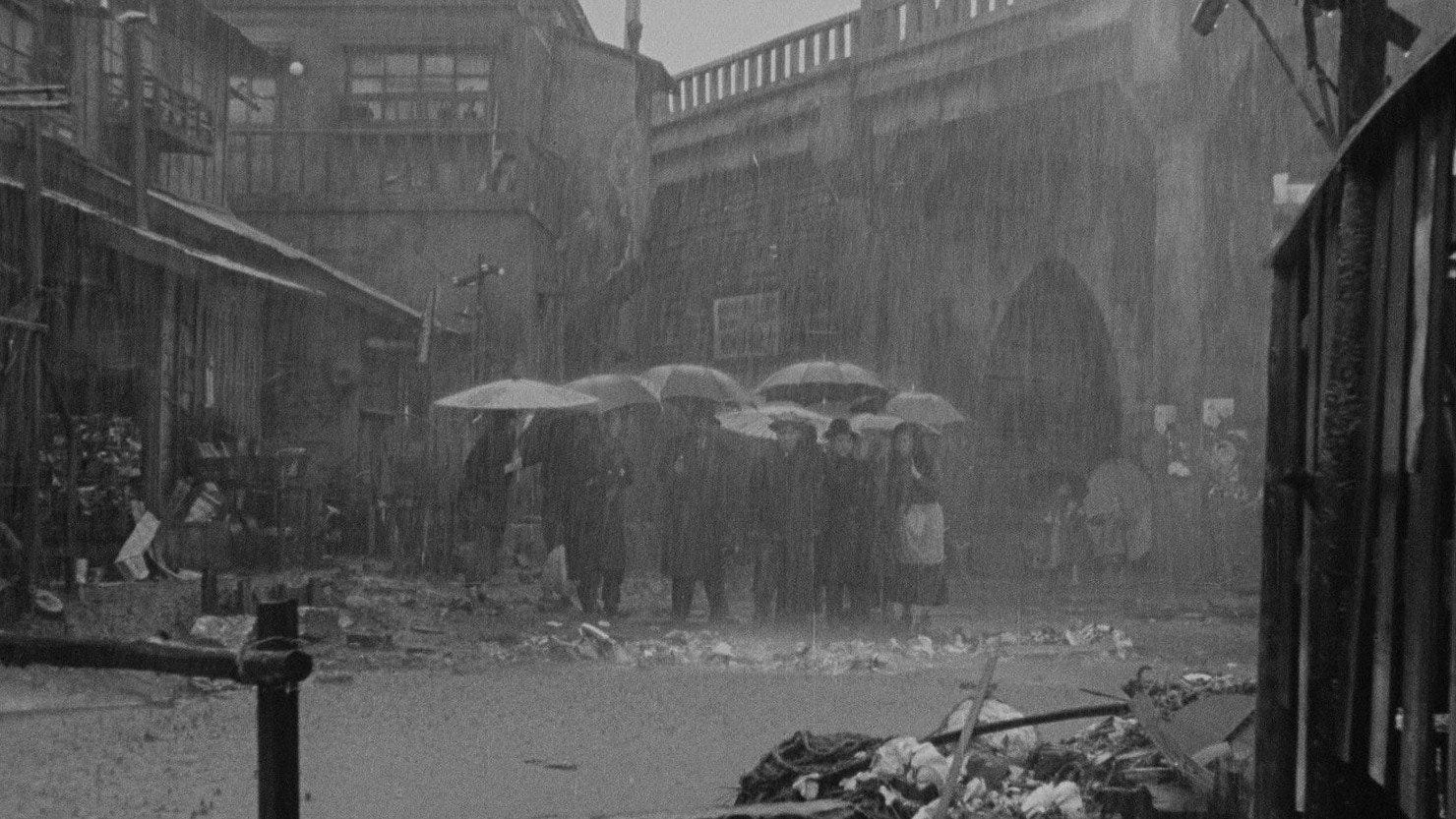
Before getting too sappy and self-reflective, we will start with the better storyteller between myself and Akira Kurosawa. The film follows Kenji Watanabe (Takashi Shimura) as he follows his mindless routine in the Tokyo Public Works Department, a group defined exclusively by impossibly messy bureaucratic red tape. Watanabe is nearing retirement after thirty years in the department, and has clearly left no meaningful impression on anyone around him. His subordinates dislike his emotionless, almost robotic way of working, his married son patiently waits for his death so that the family estate will pass down, and his only real confidant, his wife, is long-dead. Watanabe, like many of us, goes to work each day, puts his head down, goes home, and does it all again the next day. In one particularly comical sequence, we follow a group of parents through Watanabe’s governmental building as they get directed back-and-forth, up-and-down, and in endless circles for approvals to install a local playground.
This “peaceful” life of meaninglessness is very suddenly interrupted when Watanabe is told at a doctor’s visit that he has stomach cancer, and less than a year to live. There is no great way to explain the feeling that comes with this, being told you have cancer, and without being too shielded, it is something you just have to experience first-hand to really understand. It is scary, sure, but in the moment, it is more funny than anything - you hear about cancer all the time, everyone knows someone with cancer, of course, but hearing that it is you? You’re the cancer friend? What are the odds of that! I might make light of my own misfortune more than most, but even the most serious cancer patient can appreciate the cosmic comedy of being a statistic. Watanabe receives his diagnosis with whatever the opposite of “grace” is, taking that first night to explore all that Tokyo’s red light district has to offer, accompanied by a mysterious novelist that he meets at a bar. They traverse from club to club, doused in smoke and neon, eventually landing at a piano bar where Watanabe sings a beautiful rendition of the Japanese song “Gondola no Uta” (Life is Brief), plunging the entire room into deep melancholy.
While I did not go on a midnight bender through Detroit’s nightlife following my diagnosis (I was both uninterested and underaged), Ikiru nails the secondary feeling that comes with cancer diagnosis - the complete removal of inhibition. Why stop yourself if life is going to do it for you? For Watanabe, this came in the form of allowing himself to indulge in these hedonistic vices, but the freedom is really quite broad for anyone facing death in this way. I felt like I could say anything I wanted to, eat whatever I felt like (this was not doctor-advised), and utilize my illness as a golden key to allow complete chaos into whatever time I had left. I don’t think I was scared of dying, and I doubt that Watanabe was either, but with diagnosis comes this overwhelming feeling of wanderlust - not to see Yosemite, or whatever most Jeep drivers who use that word tend to do, I don’t know, but to just fill out the rest of your life with whatever you can. Making a bucket list, striking out on a date, eating and drinking things you never normally would, and using the brief time left to figure out, really just through trial-and-error, who you are - that is all that I wanted to do.
The Vicar of Vicariousness
The next morning, after disavowing the vice-filled lifestyle that he lived for exactly one night, Watanabe meets Toyo (Miki Odagiri), a young female employee within his department. Toyo comes to Watanabe asking for his signature to approve her resignation from the department, something that shocks the life-long public servant initially, but soon intrigues him. This must be what it is like, Watanabe thinks, to feel the freedom to choose. To leave a job, to pursue the things that feel fun, exciting, and new, without fear of what might come with leaving such a stable, governmental position. Watanabe never had the courage, and it is too late for him, but he begins to follow Toyo around, just to get a glimpse of what this type of life might be like. She has an infectious amount of joy and enthusiasm for the little, daily things that Watanabe has all but forgotten about.
I think many cancer patients, especially those that are as young as I was, find themselves with a unique opportunity to make a free pivot, running from the spectres of sickness towards their passions, not just whatever convenient road they were on. I sort of always knew I would go right back to where I was, the same school, the same job, the same major, and I don’t quite know why that is - sure, I’m glad I did now, it’s why I am where I am, more cliché, but I really did not pursue any recognizable changes in trajectory. That is, at least, descriptively - an immense amount changed for me following my diagnosis, my personality, my emotional makeup, how I talked to people, how I treated school and work, and all in ways that greatly, greatly altered the course I was on, whether I could describe it or not. Watanabe, in the same way that I did, continues going to the same office that has housed him for three decades. Despite his fascination with Toyo and his brief excursion into Tokyo’s nightlife, he is still a bureaucrat at heart. The desk is the same, the people are the same, the job is the same, but, also like me, his heart had changed.
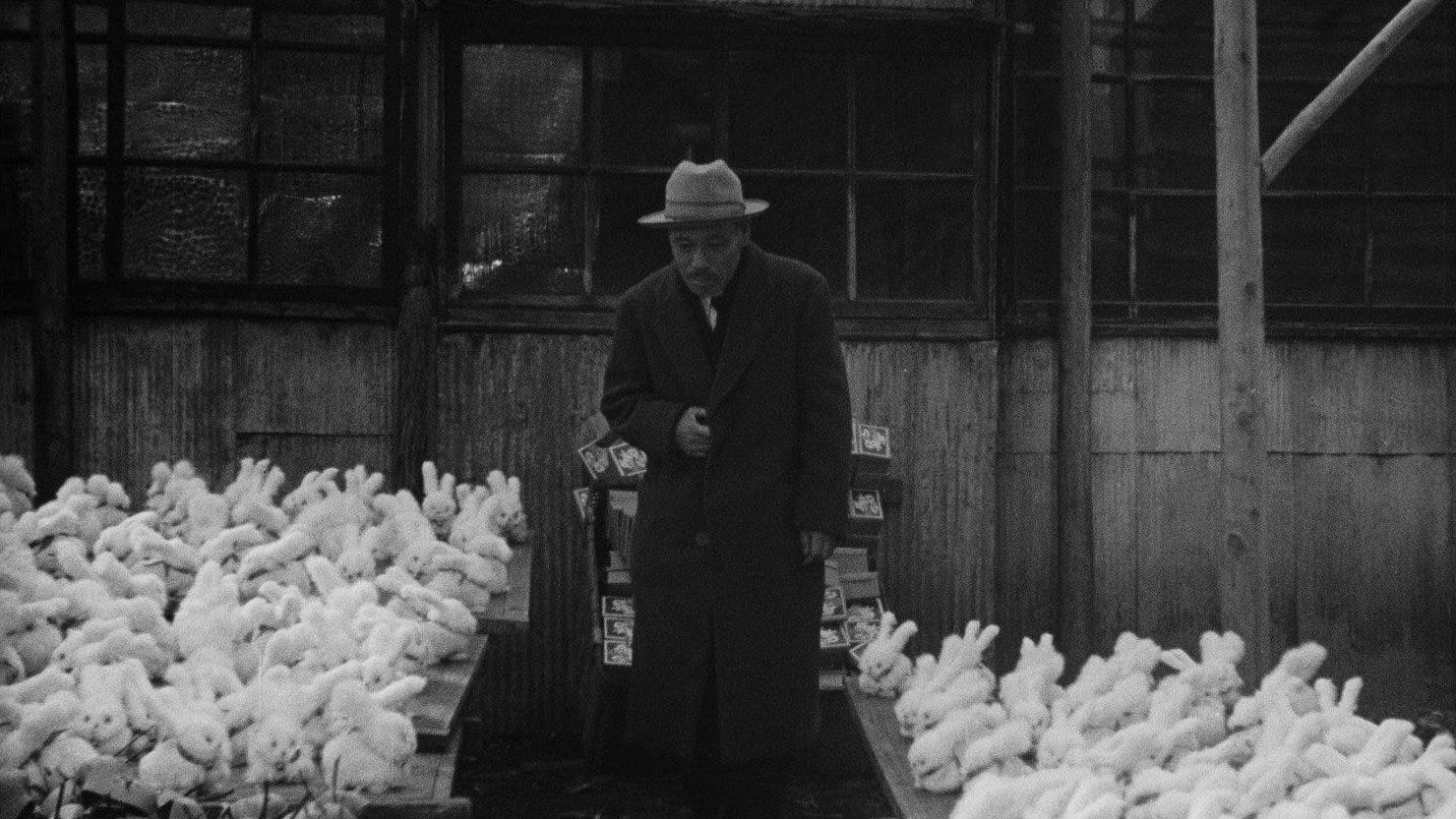
In their final meeting, Watanabe asks the young Toyo what the secret to her love of life is. She, predictably, does not quite know, but she does give him a hint: she felt happiest while working at a local toy factory, making stuffed animals, which made her feel like she was playing with all the children of Japan. This epiphany spurs Watanabe back to the office with a vigor, realizing that he was never working at the Public Works Department for salary, or for the security of his family, but for, well, the Public. Getting to do real work with real results, and passing those changes on to those that will come after him, that was Watanabe’s real passion thirty years ago. It was lost somewhere along the way, but in this final year, he begins to pursue it relentlessly, not letting any red tape stop him. While continually trampling jurisdictional concerns and departmental overreach, Watanabe spearheads his final project, the thing that will cap off his entire life: the local playground.
Life is Brief
For much of the period preceding college, I was certain that I was going to be a jazz musician. There was not really an alternative that seemed appealing to me, I was not passionate about or talented enough at anything close to the level that I was with jazz, and the idea of utilizing above-average grades and test scores to get a STEM degree and be a “technical person” sounded, honestly, insufferable to me. Well, somewhere along the way, I lost that - I don’t know what happened, but before I knew it, I was wrapping up my freshman year at an engineering college, 25% through a physics degree, and I had not performed music, at least in a real way, in nine months. I was working at an industrial manufacturing facility in a completely soulless Indiana town, helping to “optimize production” through very shoddy mathematical approximation, something that was both uninteresting and unrelated to what I was studying (which was yet another layer of disinterest).
When I got sick, I knew that all of this, school, work, even the vague impression of musical hobby-keeping that I attempted to maintain, it had to go on the shelf as I let my body be the sparring partner for stage three blood cancer. I have very, very little memory of most of this time, the chemotherapy really does a number on brain function, but I know that before I went into a half-year fog I was thinking quite a lot about how I wanted people to “think” of me. Not necessarily “remember” me, as I was fairly certain at the time that death was too far away to account for (I’ve never been a great planner), but just how people would think of me. I was always a very emotionally guarded person, and I despised the idea of anyone close to me knowing anything vulnerable or impactful about me in any way. I loved to play music, but I almost never did it for people I knew - there were a lot of graduation parties that I was contracted to play at, but the stakes at those were low enough that my protective thorns rarely emerged. In most public forums that I performed at, I preferred total anonymity - no friends, no family, just unassuming patrons that would barely remember my face.
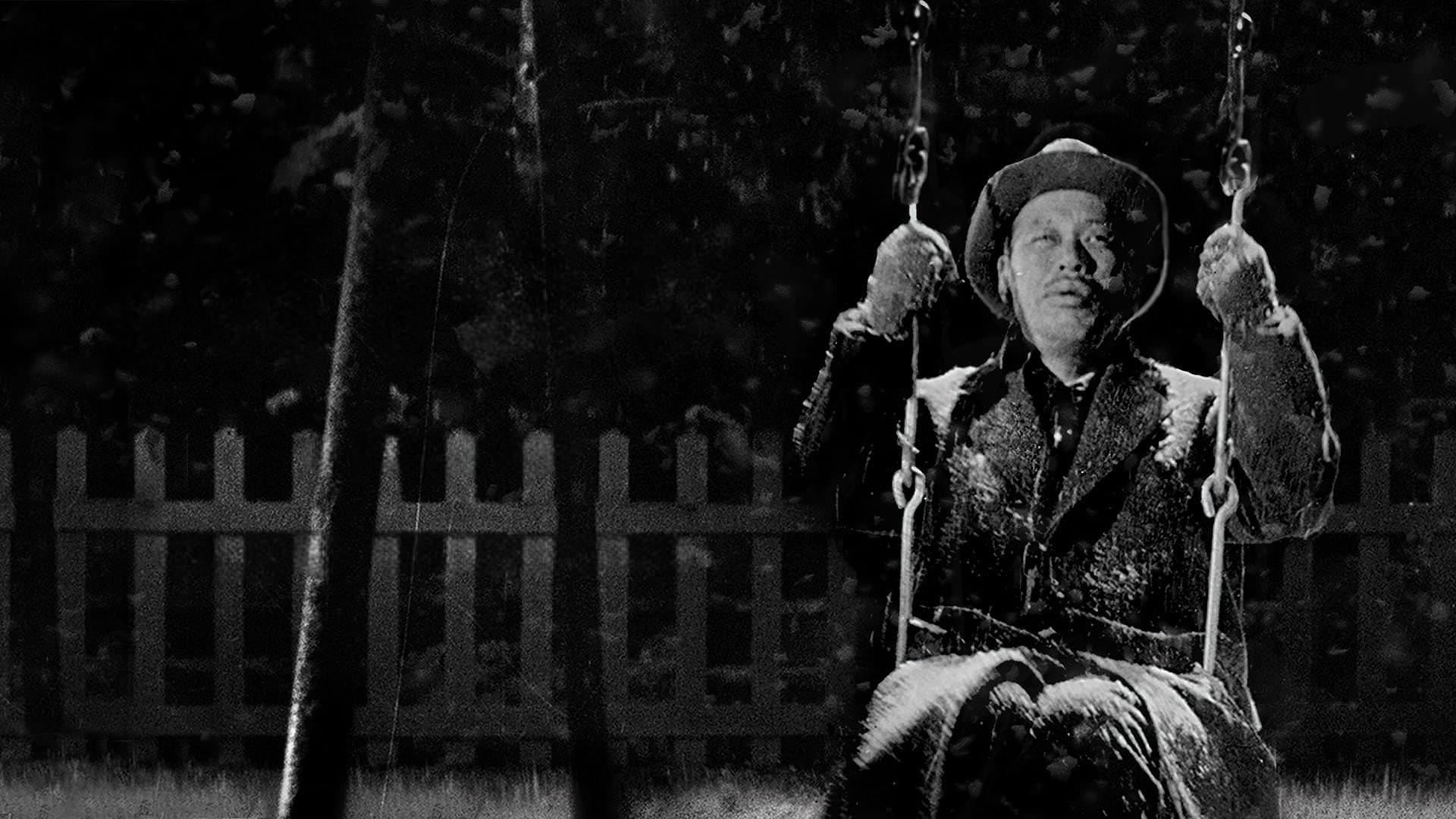
It should be no surprise that this anti-social tendency is reflected remarkably clearly by Kenji Watanabe, a man who is both devoted to his craft and entirely allergic to sharing anything about it. Finally, though, when greeted with a terminal diagnosis, he finds the courage to change. To embrace his purpose, to give some piece of his dying soul to the citizens of tomorrow, even if he knew he wouldn’t be around to see it. Ikiru concludes with one of the most touching scenes in all of cinematic history, one that any description here will do no justice for, but one that struck my soul with a force still unmatched. As Watanabe’s colleagues and family members sit around his funeral, gathered to discuss their memories of the old man, one of them recounts seeing Watanabe in his final days at the playground that he had worked so hard to build. He sat there, on the swingset, as snow fell all around him, admiring the playground that he would barely get to see. And in the dark, all alone, Watanabe began to sing a familiar tune - Life is Brief.
An Encore
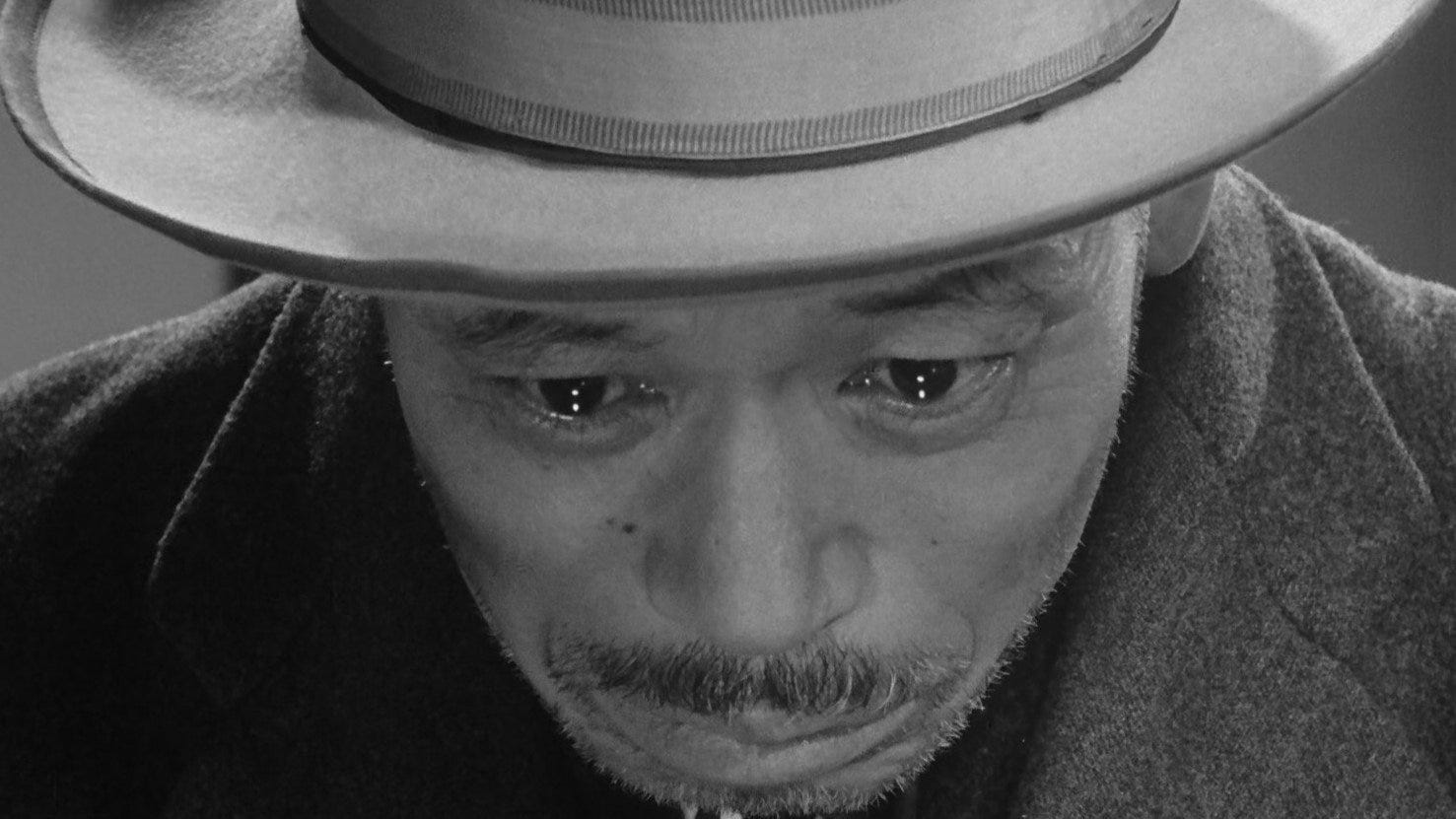
For Watanabe, he got to live his second life just briefly, in this final year, with the vigor of a man determined. The apathy he had built up over three decades of fruitless labor had been waxed clean with a single stroke, as brutal as the reason might be. I think for years, I have wondered when that vigor might come for me - I have lived cancer-free for seven years, but I continue to work in a job I barely care about, I avoid nearly all challenging life decisions, and in nearly every way I have upheld the emotional insecurities from my previous life. It isn’t all the same, though. That isolation, the fear of being seen, I have let it go - I embrace who I am, what I like, and I share it, because that’s the whole point. It’s why I wrote the first word on here two years ago, and it is why I write today, because it is what I love to do.
Cancer changed that for me. I had realized over that brutal year that I was keeping the important things out of my life, insulating this spiny layer of self-preservation for no good reason, just because exposure made me uncomfortable. A musician that hates performing is an odd form of irony, but it went deeper than that, I was a human that hated having connections. As I spent every other week greeting death through an IV drip tube, though, I longed for it, deeply. I needed to bare my soul to anyone that would listen, whether in words or arpeggios, and only through the end of this first life did I learn that.
In November of 2018, as I finished my final radiation treatment, I threw a post-cancer celebration for all the people that helped me along the way. My family, my closest friends, the chemo nurses, even the bartender at the local jazz club I had become a weekly regular at, they were all invited. There was food, connection, and, against every instinct I had, there was live music, performed by me. I played for the better part of an hour with old bandmates and new friends, and for the first time in this newborn existence, I felt free. I didn’t care what I sounded like, I’m not sure anyone was even listening, but they were there, together. I was sharing something I loved, finally, with the people I loved. I knew that I had found my purpose - all it took was dying.
This is a terrific piece, Will.
Thank you for this very personal walk down memory lane through the film "Ikiru." I love that story too. I think that in some way almost all of Akira Kurosawa's movies ask the question, "If life is so brief, what should we be doing with the time we're given?" It's certainly a haunting question...