
Crosscurrent, by Yang Chao
Life and death on the Yangtze

It is officially summer in Chicago, the best time of year to live on America’s third coast. This period always reminds me that despite the brutal, unending, dissuasive winter, it can be worth it. Hordes of boats have returned to the marinas, seemingly (and possibly literally) overnight, the beaches are once again packed with volleyballs and cyclists, and the city has shed its (very dry) skin in an annual ritual of rejuvenation. This season provides a great deal of aid to my disposition, but perhaps the healthiest reminder that Chicago gives me each summer is just how prudent the city has been about its coastline - twenty-six miles of public lakefront, legally protected from any private infringement that might scrape an ounce of what makes this city so special away from its denizens. For me, and I think many of my Chicago peers, the lake is the heart of this city. There is an oft-repeated nugget that Chicagoans can always tell you which direction the lake is - we might not know the streets or intersections, but we all possess this internal, magnetic pull towards the water.
This is, of course, not a phenomenon unique to this beautiful place I call home - water is the literal lifeblood of civilizations everywhere. In Mainland China, the Yangtze River has long served as a similar spiritual and geographical axis, a 6,300-kilometer repository of ancient poetry, localized folklore, and dynastic history. But the rise of modern industrialization, culminating in the monolithic construction of the Three Gorges Dam, greatly disrupted that ancient orientation, flooding hundreds of historic towns and displacing over a million people. In Yang Chao’s 2016 masterpiece Crosscurrent, we are treated to a film that tracks the melancholic fallout of this displacement. Rather than a traditional travelogue, Yang Chao uses the physical space of the river to construct a film where geography moves forward, but time flows entirely in reverse, forcing the viewer into a hypnotic, half-asleep state where we must confront what a nation loses when it drowns its own past.
Submerged
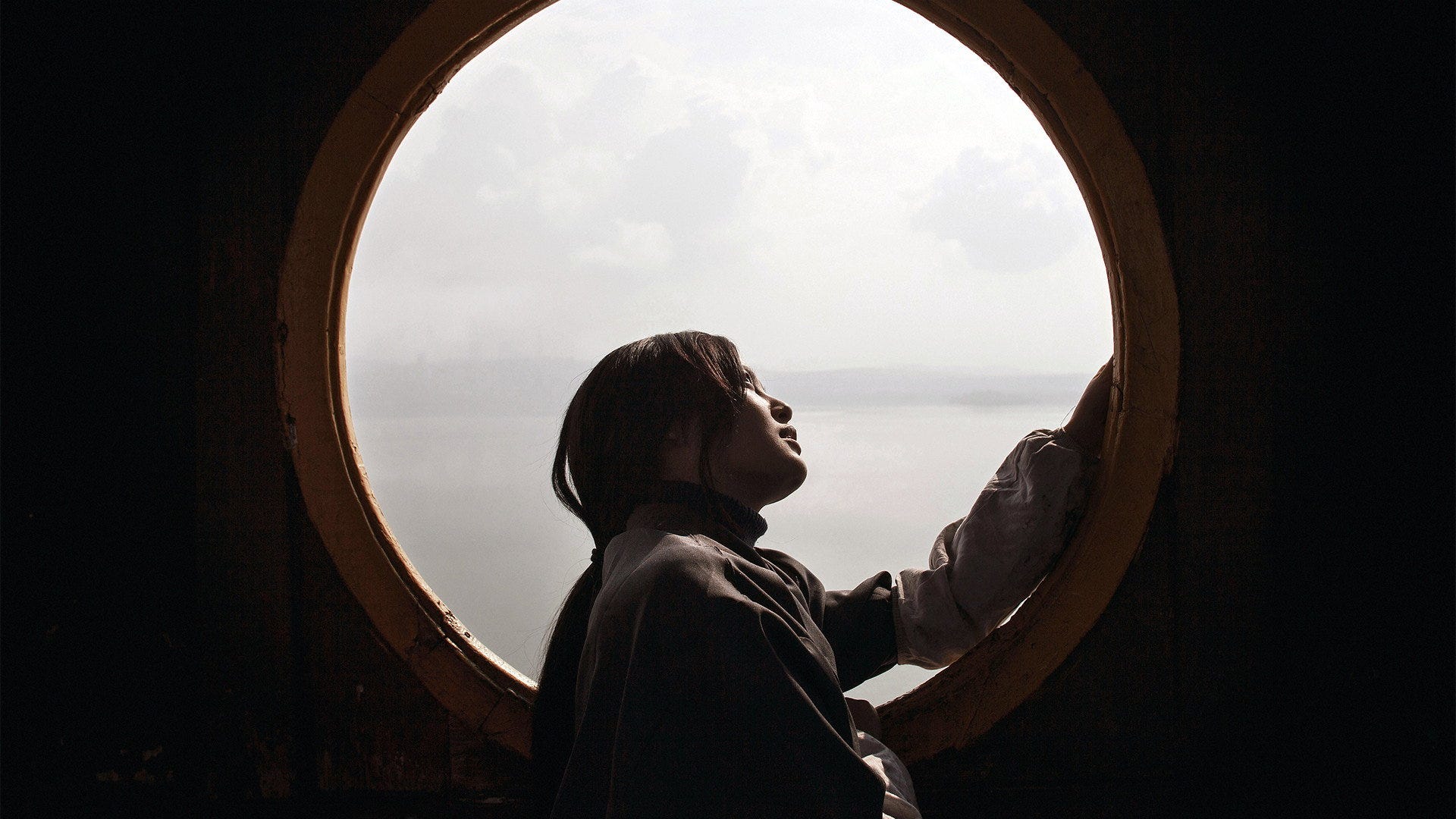
Before exploring this hypnotic and gorgeous film, it is important to set some groundwork on the history of the Yangtze. For as long as this region has been populated by mankind, the Yangtze has been an important landmark to those around it. The Hemudu and Majiabang cultures, some of the earliest cultivators of rice historically, both centered their societies on the banks of the Yangtze River Delta in the East of what we now know as China. By the 9th century BC, two Yue tribes (the group that many scholars attribute as the “origin” of modern Chinese culture) inhabited the lower reaches of the Yangtze, establishing later kingdoms that would last for several centuries. Chinese characters, political institutions, and military technology all developed in direct sight of the powerful river, as well as serving as a powerful barrier between Northern and Southern China. Irrigation systems were developed along the river, making agriculture stable and productive during the Han dynasty. I say all of this to say that the Yangtze has been the key cog that has turned the rest of China’s gears - even the jump to modernity, as national rail networks and canals were constructed across the nation in the early 20th century, utilized the river’s reliable food and flow.
If you know anything about China, historically, you might understand that many of the dynasties that controlled the region were centered near the coast, in the lower reaches of the Yangtze. This part of the nation is flat, fertile, and swampy, and provided a resource-rich society with incredibly easy transport from east-to-west. As you trace the river opposite its flow, though, the land begins to take a harsher shape. The upper Yangtze, stretching from Yichang to Chongqing is remarkably treacherous, propelled by Himalayan snowmelt and millennia-old mountain ranges. The “three gorges”, a passage of sequential chasms that spans nearly two-hundred miles, was essentially an impassable obstacle for boats until extreme modernity, making shipping and transport to the upper reaches impossible. It is for this reason that so much of culture along the Yangtze is so stratified - the historical, traditional, almost orthodox way of life that is seen in the lower reaches owes greatly to the stability of this waterway. To the west, in places like Yibin and Chengdu, life was far harder, and utilization of the river posed a great threat to life. These people, in turn, became hardened, and the popularity of extreme spice, punk music, and extreme sports in the upper Yangtze is no surprise.
That takes us to 1994, when construction began on the Three Gorges Dam, an enormous infrastructural project that would take almost twenty years to complete (I am skipping a great deal of history surrounding the foundation of the Communist Party in China, Mao Zedong’s poetry arc, and a covert American effort to build their own dam first, but many great sources exist if you desire further lore). The dam produced 95 terawatt-hours of energy in 2025, a number that is meaningless without context, approximately 24 times what the Hoover Dam in America output last year. In addition to the hydroelectric benefit, the dam allowed ships to traverse the Yangtze far easier, making the far upper reaches of the river accessible to mass-shipped goods. Millions of people have been protected from severe flooding on the Yangtze Plain by the dam and its flood control. The river flooded in 1954 over an area of 74,500 square miles, killing over 33,000 people and displacing 19 million. Wuhan, a city of eight million people, was covered in water for three months. A similar event took place in 1998, accelerating the need for the dam.
The Three Gorges Dam, however, is not a creation of pure good - controversy has hung over the project since its inception, for a great deal of reasons. The dam sits on a seismic fault, and current estimates assume that 80% of the land in the area is eroding, depositing about 40 million tons of sediment into the Yangtze annually. This makes downstream riverbanks more vulnerable, it reduces aquatic biodiversity, and it threatens cities in the Delta with geological changes that could greatly increase future seismic events and earthquakes. The area surrounding the Three Gorges has been greatly deforested, and the introduction of the dam has paradoxically made waste management harder: with more industry along the riverbanks, more plants are dumping their waste into the Yangtze, and it accumulates at the dam. Chinese river dolphins (or baiji), Chinese paddlefish, Siberian cranes, and many other animals have gone extinct or near extinct due to the hydrological changes created by the dam. NASA calculated that the mass of water stored by the dam has increased the total length of the Earth’s day by 0.06 microseconds, and has affected the gravity field in western Sichuan. All of this is dwarfed, though, by the human impact - somewhere in the range of 1.2 million people have been displaced from their historical homes by construction, and thousands of ancient and culturally significant sites have been inundated. Landslides and earthquakes remain for those that still live in the area, of which there are few, and for any municipalities still operating in the Three Gorges, there is no work or schooling that can be completed.
Setting Off
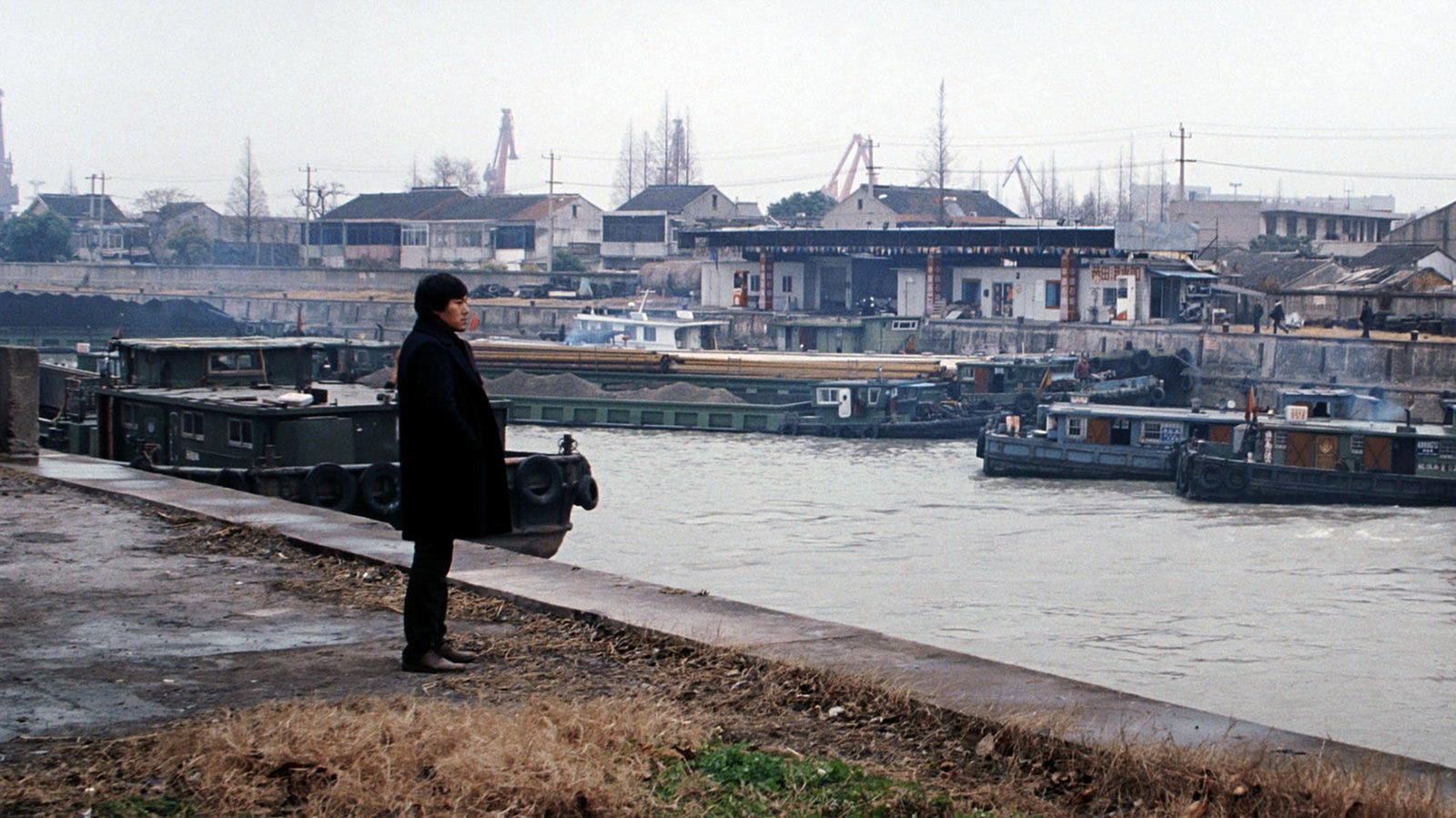
That was a lot, but I think having this historical context is crucial to understanding the deeply national narrative that Crosscurrent weaves. The film follows Captain Gao Chun (Qin Hao) as he pilots a cargo ship up the Yangtze River. At every stop, Gao goes ashore to find affairs with local women, but is perplexed as he routinely sees the same woman at different stops, named An Lu (Xin Zhilei). All the while, Gao is being tasked with toting illicit cargo disguised as fish, and turning a blind eye as he gets commission payouts for breaking the law. Right from the start, we can see the gorgeous juxtaposition that is modern China, in a nutshell. A river as old as time, hosting cities that have been the epicenter of man’s introduction to writing, agricultural, cuisine, and so much more, is now hosting a rat race of accelerationism. Gao does not ask questions about his cargo, and as he surveys the other boats in the harbors he stops in, it is clear he knows that he is not alone in his smuggling.
The film unfolds in “diary format”, taking us inside Gao’s mind each day as the nights on board begin to blend together. In the tradition of many Chinese narrative films, poetry plays a huge part here, routinely being read aloud over the film in ghostly and, often, confusing ways. Chinese poetry is one of the oldest examples we have of writing, with collections dating back to the 11th century BC still existing today, and that practicality of using it here is clear - there is not a “concise” way to describe the natural beauty, the slow, methodical change, of the blurring of one day into the next with simple narrative film. In these early days of the voyage, An Lu is gentle and caring, and she is always there, waiting for Gao. We see some of China’s most picturesque vistas through the camera of Mark Lee Ping-Bin, one of cinema’s most legendary photographers, and the location shots alone are enough to hypnotize you into this film’s grasp. The ancient fisheries of Shanghai, the bustling port of Jiangyin, and the deserted isles of Anqing all make the journey feel diverse, but evolutionary at the same time.
As Gao continues along his journey, approaching the Three Gorges, An Lu becomes more and more erratic, harsher, more violent, and harder to track down. At one point, Gao follows An Lu into a Buddhist temple, where we learn that she may be in training to become an adept. The poems become louder, and the time and place of our journey feels almost displaced, removed from the physical vessels we have seen it through, despite the clear intentions to make events sequential. This detachment, of course, is purposeful here - for thousands of years, the river moved unimpeded, watched over by ancient societies that doted on its banks. Before anyone realized, though, everything was changing - trains sped along the river with black clouds of smoke emerging from them, ferries began carrying large groups of people between the historically-separated North and South halves of China, and, of course, the dam appeared. Even religion itself has quickly changed in China, with traditional Buddhist and Taoist principles becoming almost commodified in recent decades after millennia of central importance to the people along the Yangtze.
Finding the Source

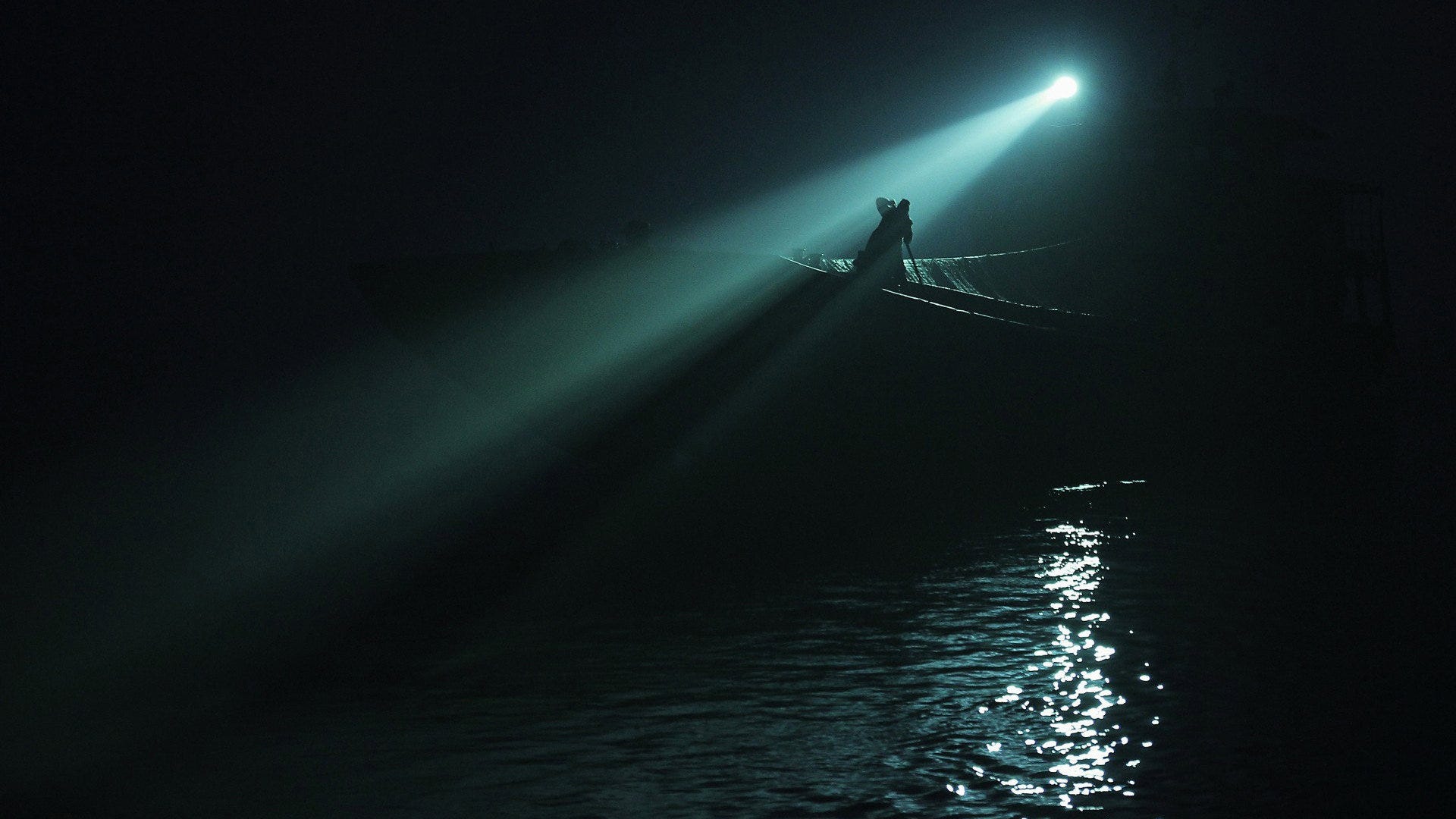
In the center of the film lies its iconic apex, a sequence in which Gao pilots his ship through the Three Gorges Dam and ship-lift. The crew traveled through the massive locks to get these shots, which adequately depict the sheer scale of the dam - it feels almost like an alien structure that Gao is traversing as seemingly miles of steel loom over him. Floodlights pan over Gao’s boat, illuminating the otherwise jet-black water, and we realize how insignificant this journey is in the grand scheme of the river - Gao is one of a million, maybe a billion, boats that will pass through the dam’s memory on this night, and his crimes and journey mean nothing to the faceless steel walls. Like the millions that were permanently displaced by the dam and forgotten, Gao too will be lost to history. Ancient ruins, religious artifacts, they were washed away by the river, obscuring any meaning to the thousand-year old inscriptions that inspired the dawn of civilization. Now, Gao too, will float through the dam and enter the future.
On the other side, Captain Gao continues his affairs as he goes ashore, only now, An Lu is nowhere to be found. At each stop, we see grayer towns, places that have been weathered and hardened by history and the dam, but we never see An Lu again. There are clues along the way, both in his stop and in his poems, but Gao is bound by financial obligations to continue his journey up the river. We get a slightly-more-clear metaphor of the commodification of history that has taken place in China as Gao stops at the Fengdu Ghost City, a series of shrines and temples that was abandoned after the dam’s construction. The site is now a tourist destination, complete with ferries, cable cars, and overpriced snacks - as Gao attempts to find meaning in the words of the ancients, his quest is blurred greatly by the overreach of modernity.
So, where does all of this lead us? The river’s current has grown more unstable as we have traveled from the fertile deltas of the east up to the rocky cliffs of the west, but the journey on the Yangtze was not really ever one of geographic change - it was temporal. A trip through time, from the ancient, quiet past of the Hemudu and Majiabang cultures, through the earliest poems, the earliest religions, all the way to modern day. We see the rat race at its end, the ultimate commodification of everything that was once fundamental in the Fengdu Ghost City: tickets to see a shrine, overpriced street food, cable cars that cast shadows over long-forgotten temples, it is an irreversible path that we can never go back on. It is fascinating that Yang does not inherently express a sort of “pure evil” associated with these changes along the Yangtze - Gao would not be able to do his job, whatever that might mean, without the changes to the river. There would be no reliable connections between east and west, or north and south, and that fact is not lost on the film at all - it only asks us to consider what is worth it.
Inertia
Finally, at the end of his boat’s journey, Gao continues on, marching deep into the harsh Tibetan plateau, one of Earth’s most uninhabitable regions, and one that happens to be the source of the Yangtze River. On a rocky cliff, surrounded by snow, we see a single grave - a flag, planted delicately in a cairn, the final resting place of An Lu. Here, we learn the truth of An Lu, and really the truth of the river: we are incompatible. As important as the Yangtze has been to human development, humans are inevitably built to accelerate, to destroy, and to eat our own tail. The moment we passed through the dam, we entered an irreversible state of decay, and as much financial benefits lie on the metaphorical other side, the loss of our history, our culture, and our land cannot be reclaimed.
As Gao returns to his vessel to return to the Delta, far to the East, he looks over the bow one last time, observing an oddly quiet Yangtze. Here, in the upper reaches of one of the most treacherous waterways on this planet, the competitive accelerationism that has seemingly consumed every aspect of culture surrounding it has finally reached Gao: as he gazes into the water, a man approaches him, and delivers a swift stab to his heart. No one is safe from the desire to be richer, to be more efficient, not even those caught in the rat race themselves.