
Directed by: Edward Yang
The beating heart of the city

This past weekend, Curry Barker’s Obsession opened to an estimated $16 million at the domestic box office, a huge success for a film of such small production proportions. The film, the second feature-length project from Barker, would be notable on its own, but has seemingly found an immense supplemental audience on the back of its creator, one half of the YouTube comedy sketch duo “that’s a bad idea” (alongside Cooper Tomlinson, who stars in the film). With Barker, it is seemingly a convenient fun fact that a popular YouTube comedian that is vaguely recognizable has his name atop the credits of a horror film that would likely draw a large audience regardless, but there is clearly something happening in Hollywood. Already this year we have seen Chris Stuckmann and Mark Fischbach, two very successful YouTube personalities, release feature debuts to mixed results, and later this month will see A24’s much-anticipated release of Backrooms, the debut of 20-year-old YouTuber Kane Parsons.
Audiences, for good or for bad, are flocking to so many of these films not necessarily for their stars, their studios, or even really their stories, but for their creators. We are deep in a creator economy, that fact has been true for some time now, but only in 2026 is it really translating to the silver screen. This trend is not just limited to influencers transitioning from other platforms, either, traditional film directors are beginning to become stars on their own. Ellis J. Sutton, in an excellent piece last week, laid out the case:
“People are no longer just following products or corporations. They’re following people.
Audiences increasingly want to know:
Who made this?
Why did they make it?
What inspired them to tell this story?
What kind of stories do they believe in?
Do I actually like this person?
Can I trust their taste?
Do I believe they won’t waste my time?
Do they consistently give me a strong emotional feeling when I engage with their work?”- Ellis J. Sutton, Audiences Don’t Just Want Movies Anymore. They Want Filmmakers.
It is true across the board, and I find it remarkably relevant to my own viewing - whether it is new releases, revisits to classics, or attempts at discovery, I have found myself caring more and more about directorial intent than I ever used to. Something about the voice behind the camera has really begun to matter to me, a tradition that goes back to the earliest days of film. It is for that reason that I wanted to start this series, “Directed by”, so that I could both share the filmmakers that matter most to me, but also to explore their voice, what inspired them, and how the full body of their work speaks to itself. Last time, we looked at Jacques Tati, the great French visionary, but today we are going somewhere different, with a filmmaker that has been mentioned more than just about any other across this publication - Edward Yang.
Origins
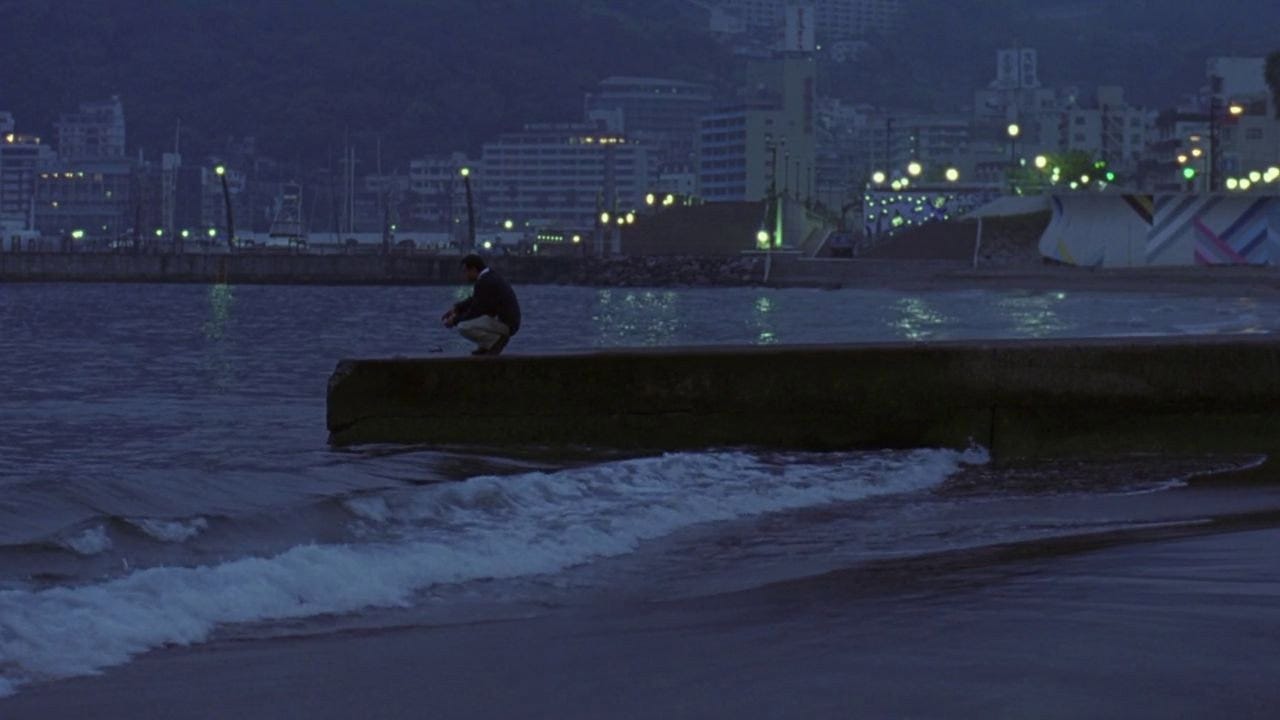
Edward Yang, like so many great directors, never really intended to be one. Born in Shanghai, but relocated to Taiwan after the defeat of the Kuomintang in 1949, Yang had pursued a career in Engineering from an early age. He has degrees from National Chiao Tung University and the University of Florida, and spent time working in microcomputers and defense software in the United States, only tangentially appreciating film as a hobbyist. He briefly enrolled at USC Film School, but the experience solidified his fears that the life of a filmmaker was not for him, claiming that the methodology of film school was too mainstream. Soon, though, the passion was rekindled, after an encounter with Werner Herzog’s film Aguirre, the Wrath of God (1972), leading Yang to dive head-first into unbridled cinephilia. Yang found particular interest in the works of Italian director Michelangelo Antonioni, a filmmaker that was on the cutting edge of Italy’s cinematic shift in the 1960s from neorealism towards Art Cinema, a movement that prioritized “authorial expressivity” - that is, hearing the creator’s voice.
In 1980, Yang returned to his home in Taiwan, where his former USC classmate Wei-Cheng Yu asked him to write a script for an upcoming film, The Winter of 1905 (1981), in which Yang also served as a production aide and had a small acting role. The film was a success, being nominated for a Best Cinematography award at the Golden Horse Film Festival, and brought both Yang and Yu to the attention of the legendary actress and producer Sylvia Chang. Chang hired Edward Yang to write and direct an episode of television, and his two-and-a-half hour episode Duckweed began the path towards the life of a director that Yang would never leave. The work kept coming, as Yang began to form connections across the rapidly growing Taiwanese film industry, a monolithic group that was on the brink of massive changes.
Often, in these discussions, it is nice to address the background and early influences on filmmakers, but I find it often inseparable, the connection between place and person. Jacques Tati would not be Jacques Tati without growing up between London and Paris, and there is no question that Edward Yang would never have become Edward Yang were it not for Taiwan. This is, obviously, an incredibly politicized place, but it might have one of the richest histories of cinema of anywhere in the world, thanks in large part to Yang’s efforts in these early days. The cinema of Taiwan traces back to the Cold War, where Taiwanese audiences found solace at the theatre amidst the dark environment of the ongoing war between the United States and the Soviet Union, two powers that had immense puppetry in Taiwan.
By 1960, the political situation had begun to stabilize slightly, and Premier Chiang Ching-kuo’s “Ten Major Construction Projects” initiative fully sent the island’s economy into the future. In the shift from agrarian life to industrial life, Taiwanese citizens became wealthier, and films became the entertainment-of-choice for nearly everyone. Romance movies, martial arts films, kung fu flicks, comedies, propaganda, musicals, the Taiwanese cinema really had it all, seemingly overnight. However, many of these films faced rejection domestically (and internationally), as they were repetitive and seemingly “lazy”. When viewed next to American or Hong Kong imports, Taiwanese films were undeniably subpar. The government took this fear into its own hands, initiating yet another series of cultural reforms, appointing two filmmakers to fully revitalize the industry - Li Yuan and Wu Nien-jen. They began to seek out non-professional writers and actors, attempting to find the cream of the crop through sheer volume, and settled eventually on three directors to work on the Central Motion Picture Corporation’s first “new” project - Ko I-chen, Chang Yi, and, of course, Edward Yang.
Rising Tide
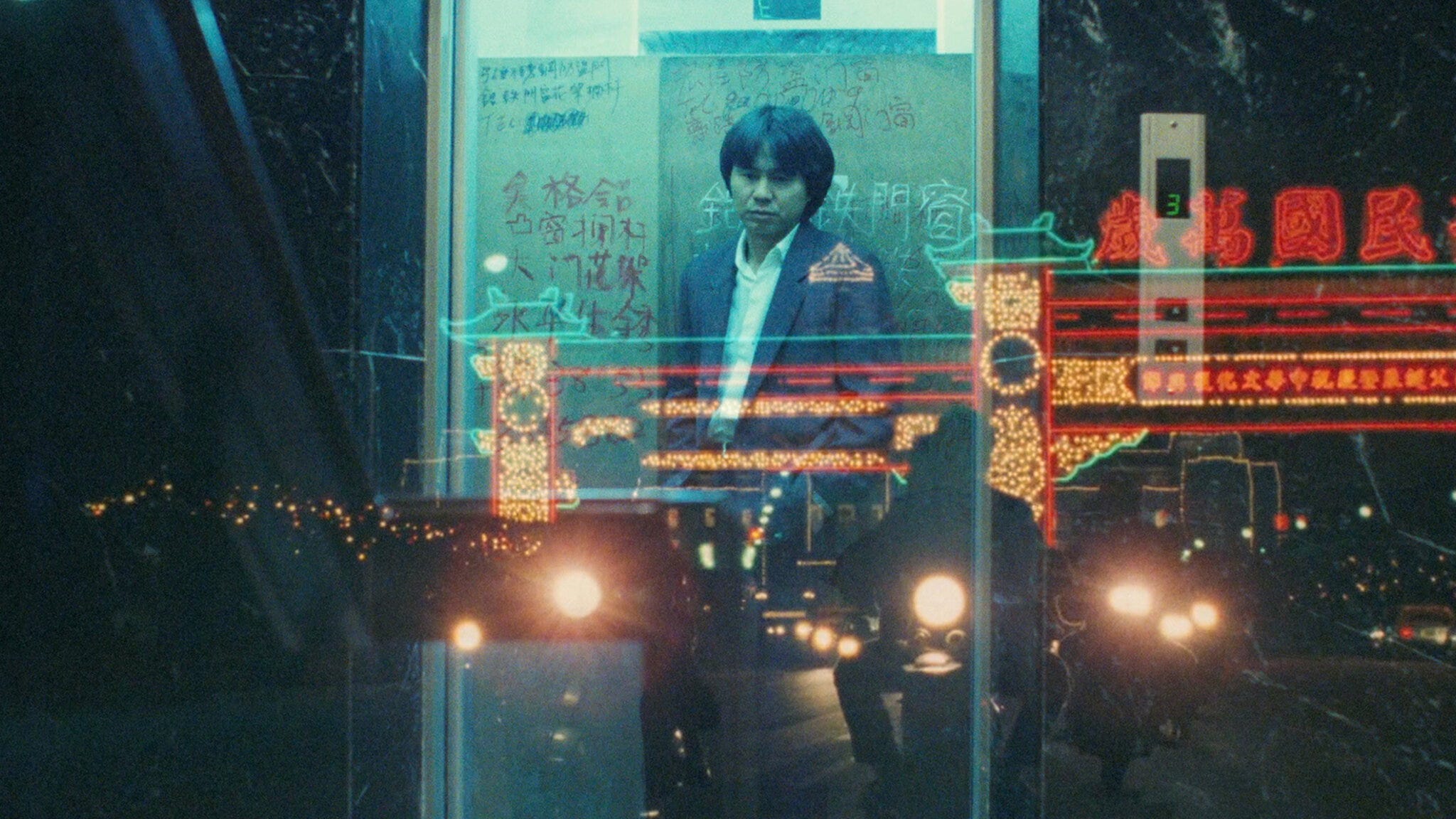
The four-segment anthology film In Our Time (1982) marks the start of what has come to be known as “Taiwan New Cinema”, or the “Taiwanese New Wave”. The movement is characterized by its analysis of real, tangible social phenomena, caring more about the realities of everyday Taiwanese citizens than the heroes of kung fu films or romances that audiences had grown tired of. Importantly, though, the movement distinguished itself from other “neorealistic” movements in Italy, Iran, or Brazil, by emphasizing the authorial expression of its creators. The Central Motion Picture Corporation encouraged Yang, Ko, and Chang to put their own style front and center in their segments of the anthology, letting audiences know that someone was behind the camera, sharing a story with them. Yang’s contribution, Desires, is about a young girl’s experiences going through puberty, and marks his first work to show in theatres in Taiwan.
Quickly, Yang had garnered enough acclaim (and finances) to direct a full feature-length film of his own, That Day, on the Beach (1983). The film is a hyper-modernist narrative that reflects on relationships, friendships, memories, and how they fracture over time, and such a clear departure from anything that had ever been produced in Taiwan, that audiences could not help but look. Yang had convinced Sylvia Chang to star in the film, playing Lin Jiali, the long-distanced friend of a famed pianist, played by Terry Hu. The film is also notable for being the first credit for cinematographer Christopher Doyle, who would go on to be the longtime creative partner of the great Wong Kar Wai. Edward Yang only made seven feature films, but his singular way of looking at memories was evident right from the start. While many of his contemporaries reflected on the lives of rural Taiwanese citizens, Yang became known for his affinity for the city, particular Taipei, and how the environment of urban Taiwan shaped relationships. The city was growing at an incredibly rapid rate, very quickly becoming one of the premiere centers of technology and finance, and many Taipei residents were still old enough to remember the country before the brutalist, neon-tinted architecture began to take shape.
Yang fully crystallized that idea in this second feature, my personal favorite of his work, Taipei Story (1985). The film cast fellow auteur and director Hou Hsiao-hsien as a former little league baseball star named Lung, who is attempting to find his way in a city that he no longer recognizes. Here, we begin to see the recurrence of some of Yang’s troupe, a tight-knit group that he routinely used across all of his films, including Hou and fellow director Wu Nien-jen, the two figures who might stand right next to Yang in the pantheon of figures that fully reshaped Taiwanese cinema. The film is an outstandingly beautiful piece about societal change, aging, how architecture imposes upon us, and so, so many other things, but Yang begins to do something in this film that he would become known for - the visual metaphor. Yang is not the first filmmaker to do this, not by any means, but his unique way of sneaking impossibly deep thoughts into a single innocent vignette is still unmatched today. Throughout the film, we see the first instances of what would become Yang’s signature, whether it is the gull attempting to stray from shore or the television sitting in a pile of trash, Edward Yang absolutely fills Taipei Story with these brief interludes that say far more than his dialogue does.
Singularity
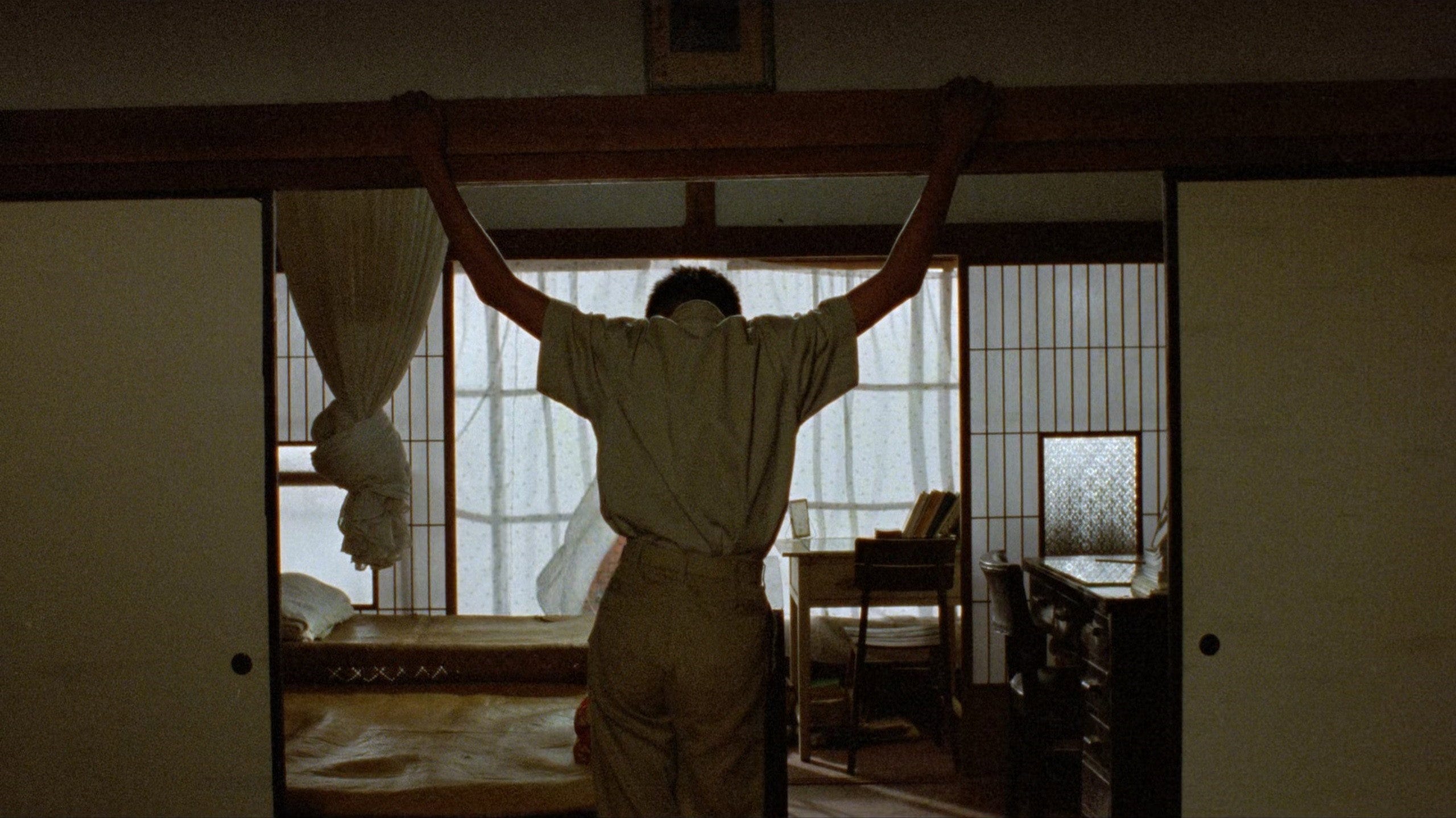
The success of Taipei Story gave Yang an enormous runway to continue telling the stories of urban Taiwanese citizens, a subject he would never divert from until his death. His third film, Terrorizers (1986), is a complicated, anti-protagonist film that watches crime and heartbreak in Taipei through the lens of a local photographer. It is a very strange film, one that I think is best watched with the full context of Yang’s life and work, but one that continues to build on his poetry of urban, Taiwanese life. We watch the continuation of his fascination with the gangs of Taipei, a subject that he would revisit frequently, but more particularly here we see his incredible ability to find and direct actors in relatively unsung parts. Taipei Story has so, so many minor bit parts that any other director would only employ to push along the narrative, but Yang often used fellow filmmakers or successful stars in these minor parts, hinting that there was something important going on within the production of the film.
This is something that has long taken place in Chinese-language film, and there are examples of it all over Bi Gan’s Resurrection from last year, but Yang’s tactics here might be the first example in Taiwan of a director telling their audience, without refrain, that they should be thinking about film as a continuum. You should recognize this actor, and you should think of them in other roles as you watch them here. Yang’s fourth film continued to build on this idea, and served as the peak of his interest in crime and gang films - A Brighter Summer Day (1991), a film that many consider to be his defining masterpiece. The Chinese title, “Gǔ lǐng jiē shàonián shārén shìjiàn”, or, “The Murder Incident of the Boy on Guling Street”, gives just a little more insight into the type of story Yang was set on telling here. Over the course of nearly four hours, we follow a series of high-school gang members in 1959 Taipei, just a decade after the defeat of the Kuomintang, as they introduce more and more violence into the still-developing city. Here, a 15-year-old Chang Chen, who would go on to be one of the most legendary figures in Chinese-language cinema, leads as Xiao Si’r, the young gangster that irreversibly sends Taipei into a decade of violent crime.
Yang, though already fairly well-regarded domestically, was instantly put on the map internationally with A Brighter Summer Day, which won more awards than I can list at nearly every major film festival across the globe. Yang used this success to produce two more crime dramas, A Confucian Confusion (1994) and Mahjong (1996). The films are often seen as a pair, both for their timing and genre links, but also as they really begin to establish Yang as a true master of this hyper-specific craft he has created. Yang was able to depict Taiwan, and particularly the city of Taipei, through immensely measured eyes, watching everything from brutal violence, social change, economic decline, life-altering heartbreak, and so, so much more, from behind his camera. These stories feel real, they feel lived in, and likely because they are - Taiwanese audiences continuously flocked to see Yang’s films because they felt important, they felt meaningful, and they felt like they were saying something about the life that audiences lived every single day.
Afterglow
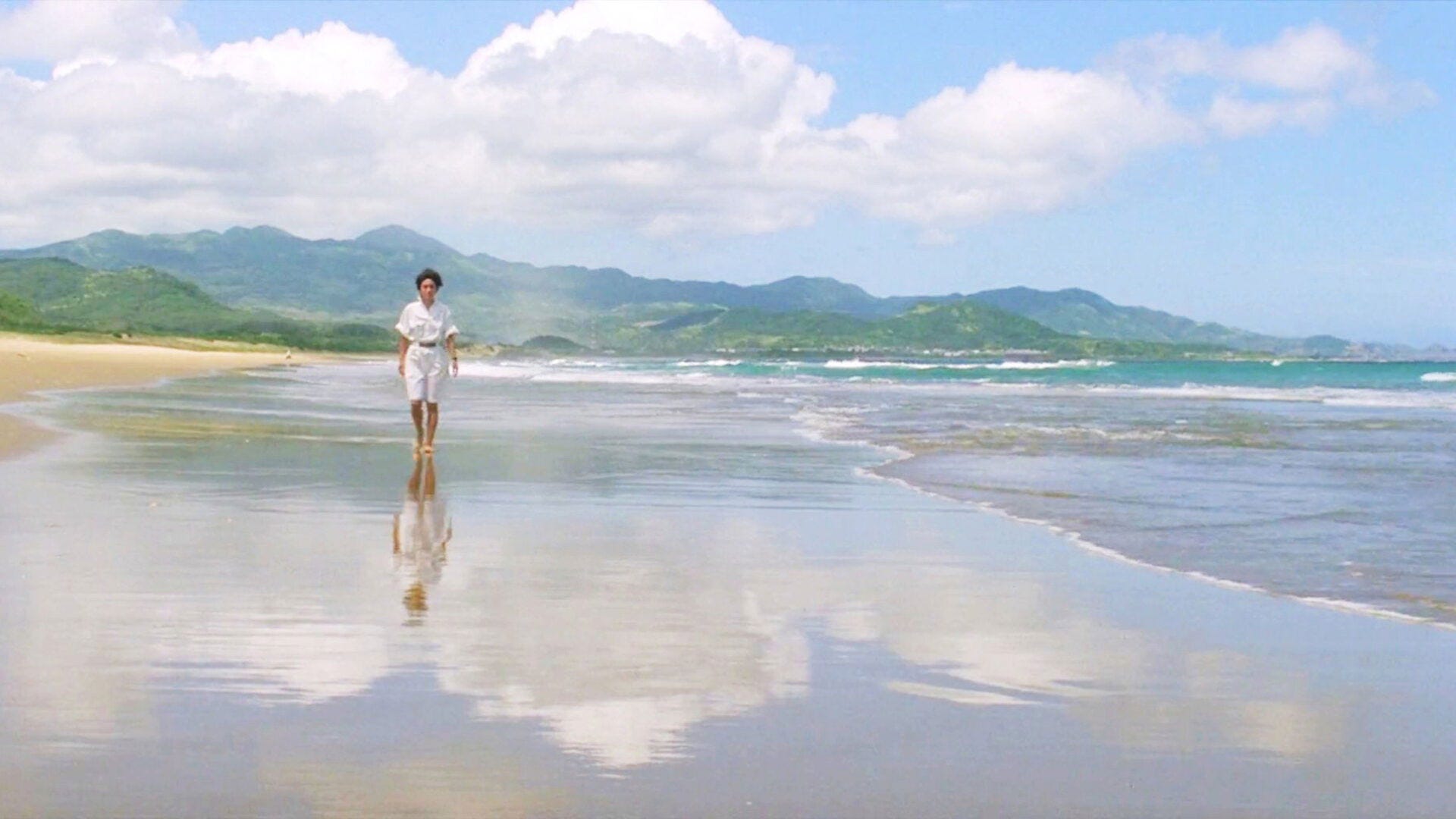
Edward Yang is likely best-known, though, for his final film, Yi Yi (2000). Here, Yang put everything he could into one single work, an epic family drama that looks at life for all that it is, through a single family. We start at a funeral, we end at a wedding, we see all that life has to offer in between, and all of the things that Yang had explored in his previous work are here in some way. The film stars Wu Nien-jen, Yang’s longtime collaborator and writing partner, in his only “leading” role across Yang’s work (despite his appearance in four films) as the troubled patriarch of the Jian family. Here, Yang really lets us in on the secret of what makes his movies, Taiwanese cinema, really all films, work so well - we know these people. In Yi Yi, we see a clear reflection of Yang’s own experiences growing up, and even if the timing is different, the lessons are the same. More importantly though, these reappearing figures in the family’s life begin to quietly shape the background of a city that is evolving before their eyes - we see the film from the perspective of the father, the son, and the daughter, but everyone from the local doctor, to a flight attendant, to a coworker, they all leave lasting marks on the family.
This is the story of Edward Yang - his films are reflections of how much we are shaped by the voices around us. Just look at the production credits across Yang’s career and it becomes obvious that he valued the perspectives of his contemporaries immensely - Wu Nien-jen, the screenwriter that handpicked Yang to lead the revitalization of Taiwanese cinema, acts in four films and has a writing credit in another. Li Yuan, the head of the Central Motion Picture Corporation that hired Yang, has a screenplay credit on Terrorizers. Sylvia Chang, Hou Hsiao-hsien, and Dun An-ning, all fellow New Wave directors, appeared in at least one Yang film. My point is, we care, deeply, about the voices behind the films we watch. We take things from our lives, from our media consumption, from our friends and family, and insert them into what we watch, whether we know it or not. We want to understand the filmmakers behind our favorite works, because it imbues them with an unseen level of character that is impossible to communicate otherwise, and Yang is no exception.
In 2007, at just 59-years-old, Edward Yang passed away after a seven-year battle with cancer. He left us with seven feature-length films, all serving their own unique purpose of projecting one of cinema’s most valuable voices into the continuous infinity that is moviegoing. Listing the names of modern filmmakers that were influenced by Yang’s voice and style is a bit reductive, as nearly all modern dramatic cinema owes some degree of credit to Yang’s hyper-modern, urban realism, but the top of the list is full of some of our greatest working directors: Hirokazu Kore-eda, Ryusuke Hamaguchi, Asghar Farhadi, Shunji Iwai, and Anthony Chen have all openly cited Yang’s work as influences. Yang’s voice continues to ring out through their work, but the beauty of film comes in how these auteurs project their own voice harmonious with Yang’s, who did the same with Antonioni before him. It is a beautiful phenomenon, how cinema can let people and ideas travel through time like this, and it is only repeating today as the modern moviegoer realizes how important those voices can be.