
Terrorizers, by Edward Yang
Our imaginary friends

This week, I got a text from an unknown number. It said, simply: “hotpot tonight?” Nothing else. No name, no signature, no context. For hours, I obsessed. Who sent it? Did they know me, or was it a scammer with weird intentions? Did they actually want hotpot, or was this some accidental digital fluke? Don’t get me wrong, I love hotpot, but why hotpot, specifically? Surely a scammer would pick something more… regular? I imagined a whole world behind those two words: a lonely diner, a mischievous friend, or maybe just someone testing social limits. I replayed every interaction I’d had in the past week, scanning for clues, imagining coincidences, and inventing motives. Had I given out my number? Was this a coworker, an estranged friend, or an old roommate? By the end, I had created entire characters, conversations, and a barely plausible timeline from a single, ambiguous message.

It was harmless, or so I told myself. In all likelihood, there was no character or motive, it was just an auto-generated piece of bait cast out into a sea of leaked phone numbers. My obsession was just innocent curiosity, a private game of pattern recognition that at least entertained me for a while. As I watched my imagination turn a small fragment into a sprawling narrative, though, I felt a familiar shift: my observation had turned into authorship. I had assigned meaning where none was given, none was ever even intended, and constructed stakes for strangers who hadn’t asked for my judgment, and who likely didn’t exist at all. The thrill and unease were inseparable, like watching a storm form inside a teacup. It’s a fascinating complex we have as a society, inventing connections that were never asked for from a few data points of unrelated information. Few films trace that compulsion with the same quiet precision, or exploit it so disarmingly, as Edward Yang’s Terrorizers.
Urban Goldfish
In the streets of Taipei, a woman is shot. We do not know why or how, but Terrorizers does not give us the chance to think about that. The scene is punctuated not by dramatic music or close-ups, but by the always-running rhythm of urban life continuing around her. Pedestrians pass, a car horn blares, a light changes, and the camera holds its cold, detached observation. The act itself is brief, but its reverberations will shape the film to come. Attention leaps from one character to another, motivations ripple across chance encounters, and the consequences of attempting to interpret anything other than the visible will accumulate dangerously. Every narrative gap becomes a space for speculation, and every coincidence becomes an invitation to assign meaning, to connect threads that likely do not exist. Here, story and observation are inseparable, and the city itself functions as a lattice of intersecting lives, misperceptions, and invisible ethical weight.
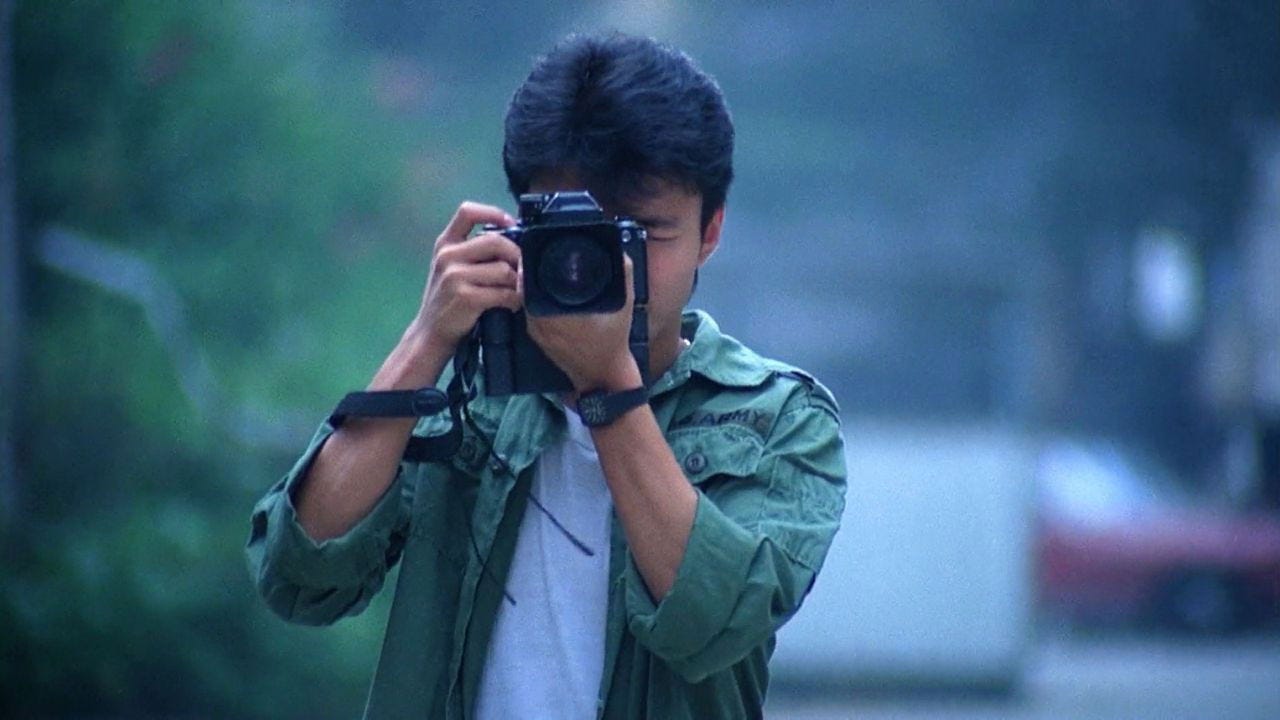
Accompanying the onlookers and gangsters in Terrorizers’ opening scene is Qiang (Ma Shao-chun), a young photographer, capturing the morning’s chaos with his camera. The police shoo him away from the body, but Qiang notices what the officers do not: Shu (Wang An), a young woman who has jumped from a balcony, broken her ankle in the fall, and slipped into an alley. Through Qiang’s lens, she peers around a corner, confirming the success of her escape. Edward Yang often inserts the photographer as a surrogate, whether it is the boy in Yi Yi or the press corps in A Confucian Confusion. His interest is clear - how the image extends, records, and transforms lived experience. Here, there is no definitive story, only what we imagine. Each image Qiang captures refracts through the camera’s imperfect attention, and, as the film soon reveals, his own. Who is she? What is she running from? Did she kill the woman in the street? The film never tells us, but it ensures we cannot leave it unanswered, and we are compelled to finish the sentence, to fill the gaps with our own restless speculation.
Yang’s films are built around patience, observation, and, more than anything, the architecture we go through life in. His camera moves with deliberate neutrality, lingering on streets, apartments, and public spaces in a way that emphasizes duration over spectacle. The city (often Taipei) is never a backdrop, it is a real participant, a living, breathing network through which lives intersect unpredictably. In Terrorizers, this sensibility structures both narrative and attention: moments that might feel incidental acquire weight through repetition and proximity. Yang’s focus is not on plot mechanics, but on the ethical and emotional friction generated when people inhabit the same world yet remain unknowable to each other. Through this lens, the narrative fractures not as a formal, mechanical experiment, but as an accidental comedy - life in the fish bowl. We, the viewer, know only what Yang is telling us, but our characters know even less. We can see the dead body, the police, the escaping witnesses, and try to piece together how their movements and lives might intersect, but the film gives us no hints. Yang presents us with the same interstitial map that all of his films contain, presenting the city as it is: always moving, always indifferent.
Deep Focus
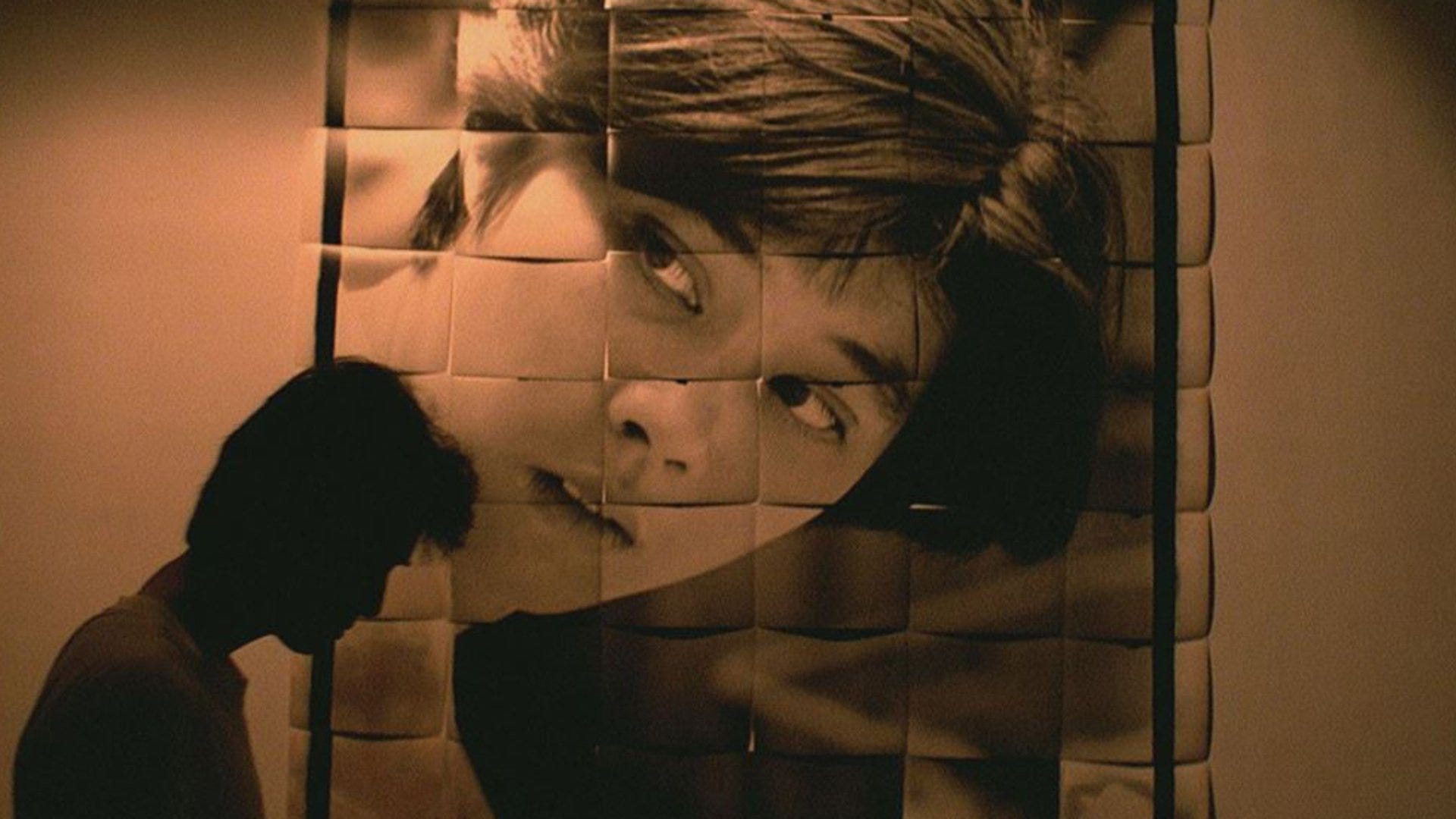
There is a fascinating scene early in this film where Qiang is taking photos of pedestrians crossing a bridge in Taipei, repeatedly focusing on various characters that are framed as if they will become important. We have all seen the technique before, a film carefully panning across a faceless crowd until our “protagonist” is revealed visually. In Terrorizers, anyone could be that someone, it is really up to us to fill in the gaps - we see a group of businessmen, a young girl on roller skates, an old man, but they are all just who happens to be in frame when Qiang looks. The camera does not guide us toward a single “protagonist” or outcome, instead, it presents each figure with equal attention, as if their significance depends entirely on our curiosity. This uncertainty transforms even simple gestures into narrative possibilities, compelling us to watch closely and speculate about connections that may, or may not exist.
Repeated visual motifs, like the same alley seen from multiple perspectives or the same street traversed by different characters, create connections between narrative threads without explicitly signaling their importance. The editing reinforces this structure, cutting between characters and locations in a way that emphasizes simultaneity and overlap. Viewers are required to track these fragments themselves, constructing relationships and consequences from what is shown, as nothing will ever be said about it. By presenting events without commentary or moral framing, Yang emphasizes both the unpredictability of human interaction and the responsibility of attention: noticing and interpreting carries weight, even when the full story remains unknown.
Yang frequently uses framing through windows, doorways, stairwells, and other objects to create layers of perspective that emphasize both proximity and separation. Shu is often seen through doorways or across streets, partially obscured, while Qiang photographs her from a distance. Reflections in glass or mirrors repeatedly appear, doubling images of characters or multiplying the possibilities of where attention might fall. Even minor movements, like a hand on a railing or a person descending a staircase, gain significance through careful placement in the frame, suggesting unseen connections or potential consequences. Yang preys, deliberately, on the expectations of anyone who has ever seen a film of any kind, to misdirect. By controlling what is visible and what remains partially hidden, Yang draws attention to the limits of perception, showing how small, ordinary actions can carry ethical and narrative weight without ever being fully explained.
Multiplication
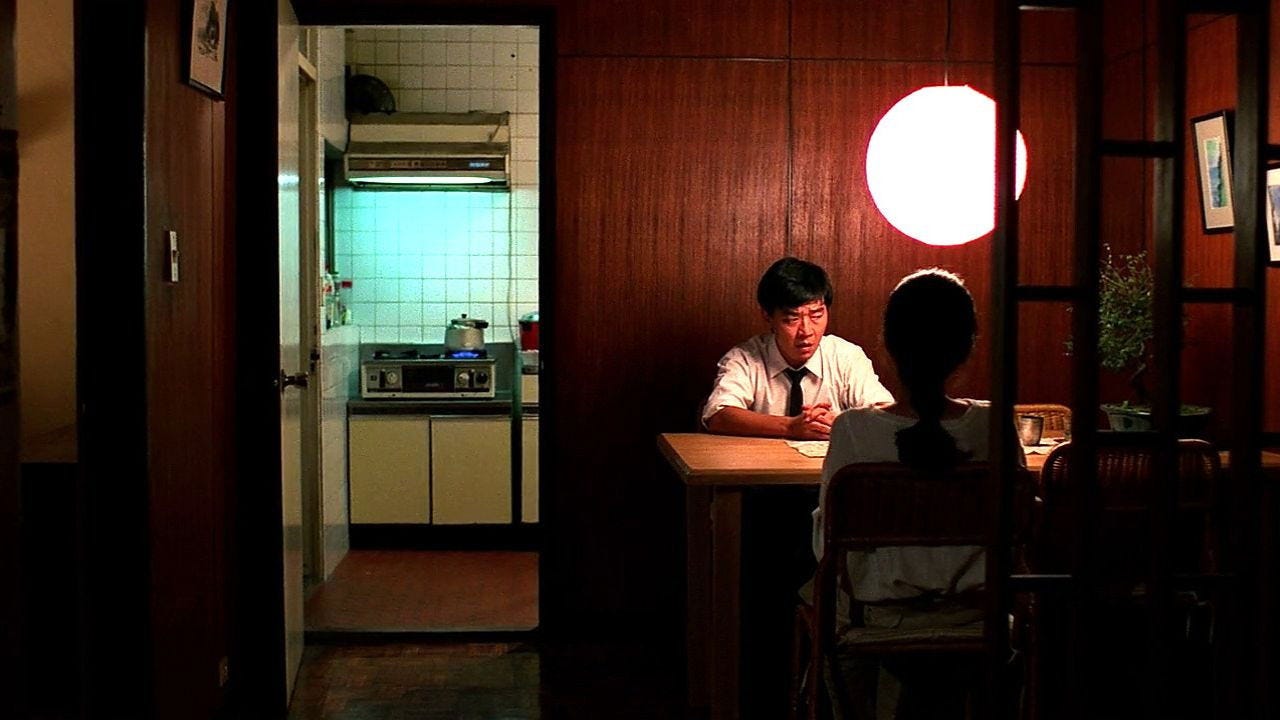
Intertwined with the lives of Shu and Qiang, we see scenes of the films other two points of focus, Li Lizhong (Lee Li-chun), a hospital worker, and his wife, Zhou Yufen (Cora Miao), a writer. Zhou has been trying for years to finish her novel about a couple with marital issues, but is continually mired in a deep depression that was brought on by a miscarriage years earlier. Li, stuck in the corporate ladder at the hospital, is presented a unique opportunity to move up after his section chief dies suddenly of a stroke. His new supervisor asks Li if he feels fit to take the chief position, but there are several candidates at play. Li, as any great capitalist would, volunteers himself for the position, and falsely implicates his coworker and longtime friend Jing in a corruption scandal that was plaguing the previous chief, causing Jing to resign in frustration. Zhou, in a chance encounter, is rehired by her former boss, who essentially gives her a blank check to write whatever she wants, and the two begin an affair.
Qiang, now fully obsessed with the young woman in his photograph that he still does not know, is forced to move out by his suicidal girlfriend. He eventually moves into the now-abandoned apartment that was owned by the gangsters, the same one he watched Shu jump out of. Shu, stuck at home due to her injuries, is driven by boredom and malice to place prank calls around the city - numerous construction crews and pizza delivery drivers show up at the apartment, none of which were called by its new occupant Qiang. Eventually, after calling hundreds of numbers in the Taipei Yellow Pages, she reaches Zhou. She asks if Zhou’s husband is home, and that she needs to talk with him about something. Shu tells her that they can meet at a discrete address, which we come to learn is, of course, the apartment. Zhou shows up, angry, and is greeted at the door by a confused Qiang. We are never quite told why Zhou is frustrated, but the implications are clear, and Yang lets us fill in the gaps however we want. These emotions eventually drive the writer out of her malady, and she finishes her novel, a First Prize Winner about a cheating husband who kills his wife and himself.
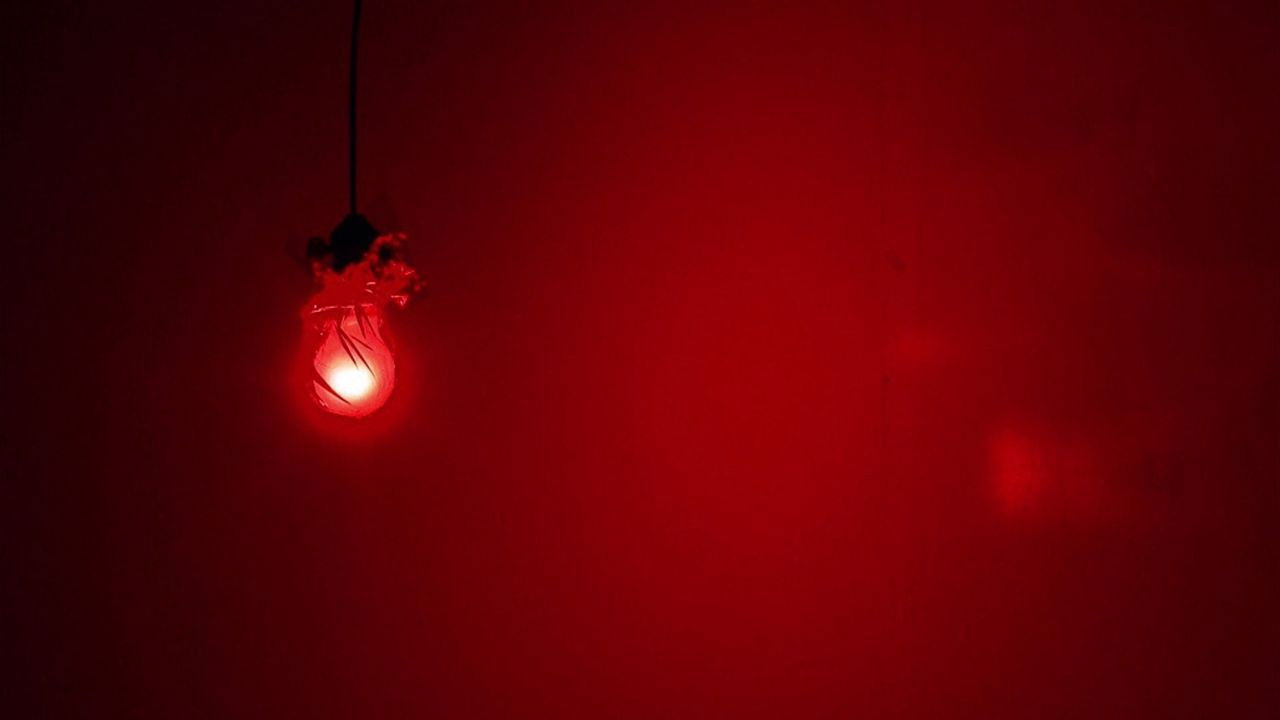
Qiang, learning about the novel and seeing the author’s face, realizes what has happened. Through his own dot-connecting, he suspects that Shu, the woman he watched jump from the balcony, has been prank calling people to the apartment. Zhou, the author, showed up, and believed that her husband had been cheating on her. To Qiang, only he knows the full truth, and he must fix the situation - he tracks down Li, whose marriage has now fully fallen apart, and gives him the photos of Shu and her gangster boyfriend. That same morning, Li is informed by his supervisor that he has not been chosen as the new section chief, and he storms out of work. The film ends with an electrifying montage of Li stealing the police chief’s gun, shooting his wife’s boss and lover, his own boss, and eventually, Shu. As blood sprays onto the wall, the film cuts back to the police chief, who wakes up to the noise of a gunshot. He goes to his bathroom to find that Li has shot himself, and we see an image of Zhou waking up next to her lover. Was it just a dream? If so, whose dream? The police chief? Zhou? Qiang? Li’s own dream before taking his life?
Yang never tells us, and that is the point. Terrorizers is less about linear causality than about the human impulse to connect dots, dots that were never meant to touch. Every character acts on incomplete information, misreading intentions, imagining motives, and projecting fears. Qiang interprets a photograph, Shu places aimless calls, and Li makes decisions based on half-baked assumptions. The narrative demonstrates how attention itself carries consequence: noticing, recording, or intervening is never neutral, and even minor actions can ripple outward in ways that the actor cannot predict. By leaving causality ambiguous, Yang positions the viewer in a space of ethical and cognitive responsibility, forcing us to inhabit the same uncertainty that governs the characters’ lives. In the end, the convoluted narrative of this movie is not a puzzle to be solved as it initially appears, not at all. Life, in Terrorizers, is simultaneously random, interconnected, and ethically charged, and it is the act of watching, both for the characters and the audience, that animates its tension.
The Violence of Attention
We, like Qiang, Shu, Li and Zhou, are left to piece together meaning from incomplete information, to imagine motives, and to confront our own desire for causality and closure. In doing so, Terrorizers mirrors life itself: complex, partial, and often unknowable. The precision of Yang’s camera, the careful layering of perspectives, and the subtle choreography of timing and coincidence all work to make this ethical and emotional tension palpable. Watching Terrorizers becomes a practice in attentiveness, in humility before the unknowable, and in recognition of the invisible threads that link human lives. If we recognize the bread crumbs that Yang doesn’t leave for us, the randomness of it all becomes so clear - Qiang never knew this girl. Li’s boss never said he would get promoted, only asked about it. Zhou never suspected an affair, we put that into the story ourselves.
Ultimately, Yang does not hand us certainty, he hands us attention. Life, as in the film, is a lattice of fragments, each observed, misread, and weighted by consequence. I think back to the text, the one that simply said, “hotpot tonight?” There was no name, no context, no indication of intent, and yet I still can’t let it go. I have imagined every possibility, I have replayed every interaction of this past week, scanning for clues, inventing motives, and constructing entire conversations and timelines from that single, ambiguous message. What if it just means nothing, though? In that obsessive speculation, I became both observer and author, weighing the consequences of actions that likely did not exist. Terrorizers is the same kind of experience: a series of glimpses and coincidences that invites, and almost demands, that we fill in the gaps ourselves. The human impulse to connect dots, to imagine hidden motives, and to assign meaning where none may exist is both exhilarating and perilous, and Yang traps us in that tension with immense precision. In both the text and the city of Taipei, it is only in paying attention, in really watching closely, that the threads begin to hum, revealing the fragile, invisible webs that link lives together.
It's interesting how you delineate the shift from observation to authorship. Whats the precise cognitive trigger for that pivot?